
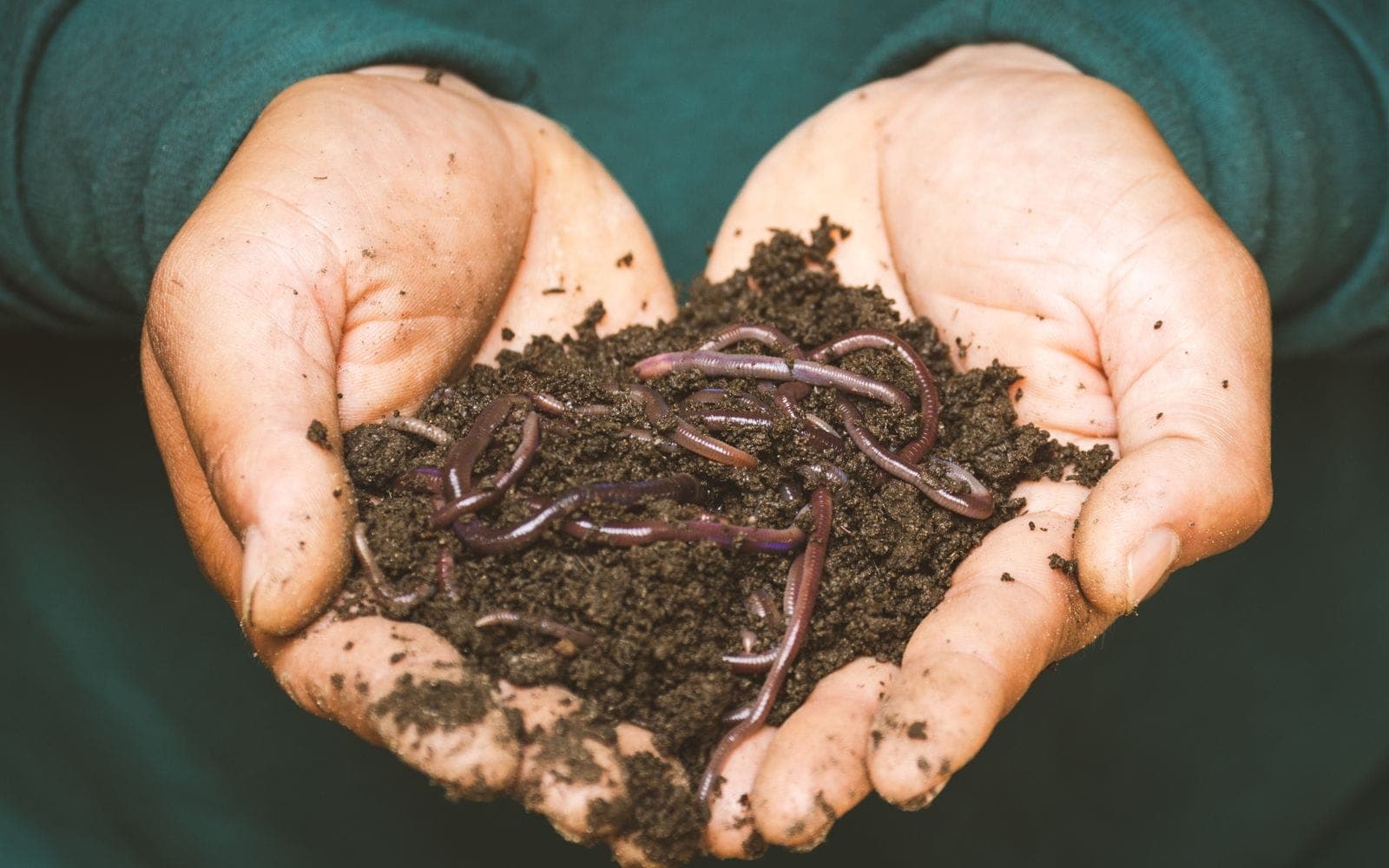
A principle throughout organic farming is "nourish the soil so the soil nourishes the plants". Instead of providing soluble nutrients directly to plants in batches, organic farmers focus on building a healthy soil, where natural biological processes release nutrients gradually according to the plant's needs.
Organic matter in soil
Organic matter is the portion of soil that comes from dead plants, animals, and microorganisms at different levels of decomposition. It affects nearly every important property of soil: water holding capacity, porosity, nutrient exchange capacity and erosion resistance. Building organic matter is a multi-year job, through composting, burying crop residue, planting cover crops and limiting over-till.
Soil microorganisms
Every gram of healthy soil contains a large population of bacteria, fungi, protozoa and nematodes. These organisms decompose organic matter, fix nitrogen from the air, solubilize indigestible phosphorus and form symbiotic relationships with plant roots. Symbiotic mycorrhizal fungi, for example, greatly expand the area of land that roots can exploit. When synthetic chemicals are stopped and a steady source of organic food is maintained, the population often recovers markedly.
Practices that nourish the soil
- Apply properly decomposed organic fertilizer instead of fresh fertilizer.
- Keep the soil mulched, with plants or residue, to protect the surface.
- Diverse crop rotation, intercropping legumes to supplement biological nitrogen.
- Avoid deep and frequent plowing, which causes loss of organic matter and breaks down fungal networks.
- Avoid soil compaction by heavy machinery when the soil is wet.
Be patient and observant
Natural fertility does not increase rapidly in one crop. But as the soil strengthens, crops are more resistant to pests and adverse weather, the need for irrigation and fertilization is reduced, and production costs over time become more stable. This is why established organic farms often consider periodic organic matter measurement as an important management indicator.