
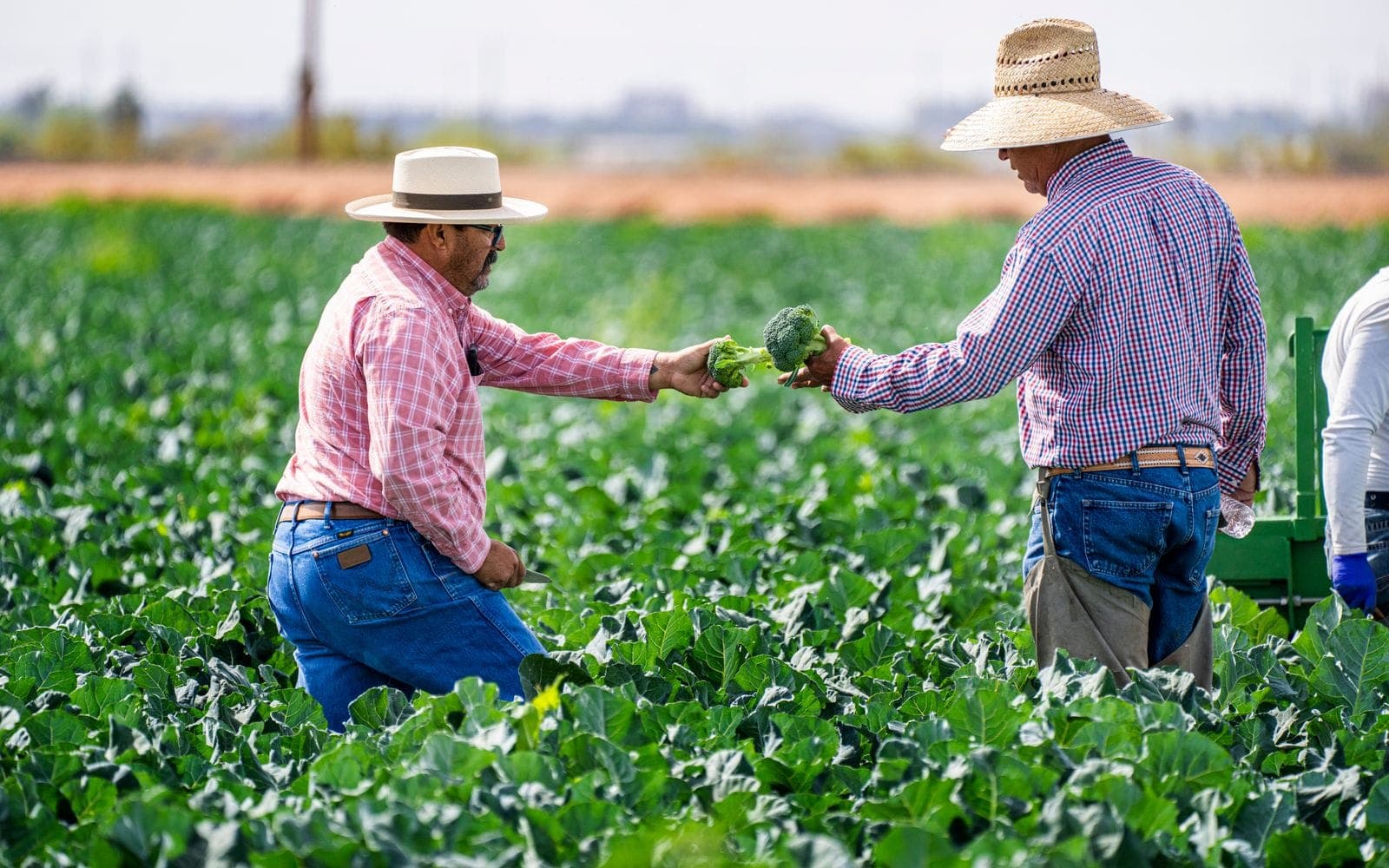
For many farmers, "certification" sounds complicated and expensive. In fact, it is a fairly standardized process, specified in the standards for certification organizations (in Vietnam, TCVN 12134:2017 - Organic agriculture - Requirements for certification organizations) and in Decree 109/2018/ND-CP. Understanding the steps in advance helps manufacturers prepare documents correctly and avoid unnecessary time delays.
Step 1: Determine standards and choose a certification organization
First, we must decide which standard will be certified according to - TCVN 11041 for the domestic market, or standards of the destination export market (USDA Organic, EU Organic, JAS...). Then choose a certification body that is designated or accredited for that standard. With TCVN, certification organizations must be appointed by a competent state management agency and their operations must be in accordance with TCVN 12134:2017. At this step, we should clearly discuss the scope of certification, fee schedule (registration fee, assessment fee, annual monitoring fee), schedule and list of documents to be submitted.
Step 2: Submit registration application and organic production plan
Records usually include legal entity/production household information, diagrams and maps of plots, land use history in the last few years, list of plants and varieties, list of materials expected to be used, irrigation water source, and description of cross-contamination control measures. The heart of the application is the organic production plan (organic system plan) — a document that describes specifically how the farm will practically comply with each standard's requirements, from soil improvement, crop rotation, pest management to harvesting and preliminary processing.
Step 3: Evaluate documents
The certification organization reviews the dossier, compares it with the requirements of the standard and points out points that need to be clarified or supplemented. This is the time to early detect problems such as a type of material that is not valid, a buffer zone that is not large enough, or a land use history that has not had enough time for conversion. Dealing with it at the paperwork stage is much cheaper than revealing it once the auditor is on site.
Step 4: First assessment of the scene
An auditor comes to the farm, visits all plots within the registration area, checks material warehouses and processing areas, reviews field logs and documents, interviews farmers, and may take soil, water or product samples for residue testing. The purpose is to compare what is recorded in the records with reality: the records say what is planted in which plot, what is fertilized, and it must match in the field.
Step 5: Handle nonconformities and make decisions
If there are non-conformities, the manufacturer is required to fix them within a certain period of time and provide evidence of the correction. After all points are closed, the certification organization issues a decision to issue a certificate, specifying the applicable standards, scope (plot, crop, estimated yield), and validity period. The post-certification assessment and supervision method for TCVN organic agriculture is carried out according to method 5 specified in Circular 28/2012/TT-BKHCN, which means there is periodic supervision throughout the effective period.
Common time and costs
From submitting a complete application to receiving a certificate, it usually takes several months, not including the land conversion time (usually 12–36 months depending on standards and type of tree). Decree 109/2018/ND-CP has a support policy: the budget supports 100% of the cost of determining regions and areas eligible for organic production (basic investigation, topographic survey, analysis of soil, water, and air samples) and partially supports the cost of issuing product certificates in accordance with TCVN on organic agriculture, according to local conditions and norms. You should ask the Department of Agriculture and Environment or the district-level agricultural office about the support program being applied in the area.
After certification
Certification is not a destination but a status to maintain. The farm is subject to periodic monitoring assessments, usually annually, and may be subject to unscheduled assessments when there are unusual signs or complaints. Keeping up-to-date records is much more important than "rush preparation" before each audit — auditors can immediately read a notebook that was only accumulated a few days before their arrival.
List of documents should be prepared before submitting
- Legal documents of production households/organizations; Land lease contract, if any.
- Overall diagram and map of each plot, with plot numbers and clearly stating boundaries, buffer zones, and water sources.
- Land use history for the last 2–3 years for each plot: crops, materials used, especially the last time a banned substance was used.
- List of expected supplies (fertilizers, pest management products, seeds) with labels and technical sheets.
- Results of analysis of most recent soil and irrigation water samples.
- Written organic production plan: crop rotation, soil improvement, pest and weed management, harvesting, preliminary processing, cross-contamination control.
- Sample of recording forms to be used (field diary, warehouse book, harvest book, sales book).
Why are documents often returned many times?
The reasons are repeated: the plot map does not match the field; Land use history is generally declared, not enough to determine the starting point for conversion; The list of supplies has products with unknown ingredients or has not been properly evaluated; The organic production plan is written in a standard transcription style and does not describe the specific practices of the farm. Each round of additional documents lasts a few weeks to a few months, so investing time in doing it thoroughly from the beginning is often cheaper.
The role of consulting
For a farm that is certifying for the first time, hiring an experienced consultant to develop an organic production plan and documentation system often saves time and additional rounds. However, the consulting organization must be independent of the certification organization: a unit that both consults and certifies for the same customer is a conflict of interest and is not accepted according to third-party assessment principles.
Reference
- Decree 109/2018/ND-CP on Organic Agriculture— National database of legal documents.
- Instructions for organic agriculture certification activities— Government Newspaper.
- TCVN 12134:2017 — Organic agriculture — Requirements for certification organizations.
- Office of Accreditation (BoA)— look up an accredited certification body.